Your Brain Won't Let You Put the Phone Down at Night — Here's the Uncomfortable Truth Why
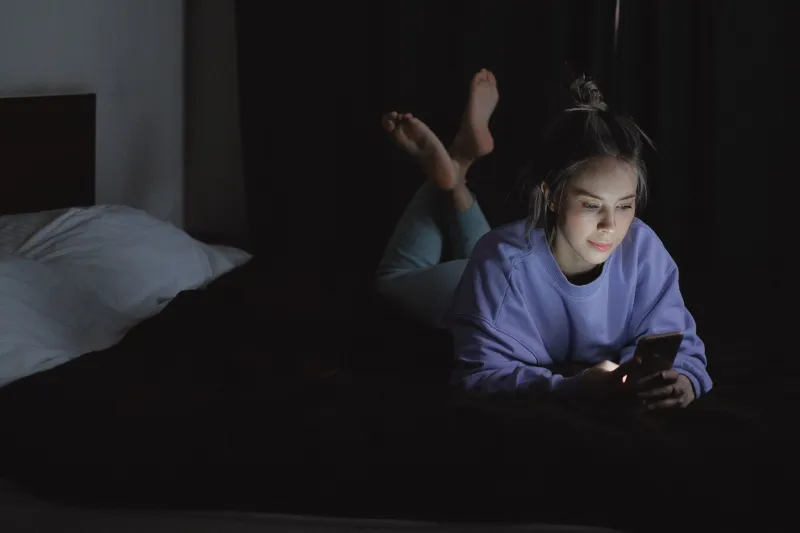
Let's be honest about something. You already know that scrolling through your phone in bed is bad for your sleep. You've probably read the headlines, maybe even downloaded a sleep app or two. And still — still — you're doing it tonight, and you'll probably do it tomorrow night too.
So what gives? If knowledge were enough to change behavior, we'd all be sleeping eight hours a night with our phones charging across the room. But that's not how the human brain works, and understanding why might be the most useful thing you learn this week.
The Dopamine Loop You Didn't Sign Up For
Here's the core of the problem: your brain is running a reward system that was designed for a world that no longer exists. Every time you encounter something novel — a surprising headline, a post that makes you laugh, a comment that makes you furious — your brain releases a small hit of dopamine. Not a huge flood, just enough to make you feel like the next scroll might deliver something even better.
This is called a variable reward schedule, and it's the same mechanism that makes slot machines so hard to walk away from. The unpredictability is the whole point. If every post were equally interesting, your brain would get bored fast. But because you never quite know what's coming next, the loop keeps spinning.
Now layer on the fact that this is happening at 11 PM, when your prefrontal cortex — the part of your brain responsible for rational decision-making — is already starting to wind down. You're literally operating with reduced capacity for self-regulation right when the pull of your phone is at its strongest.
It's Not Just Distraction — It's Anxiety Avoidance
Here's the part that doesn't get talked about enough: for a lot of people, late-night scrolling isn't really about entertainment. It's about not having to sit with your own thoughts.
The moment you put your phone down and close your eyes, your brain tends to serve up everything you've been too busy to deal with during the day. The awkward email you sent your boss. The conversation you replayed sixteen times. The thing you're worried about but haven't figured out yet. Your brain, trying to be helpful, decides this is a great time to run through all of it.
Scrolling delays that. It gives your mind something external to latch onto so it doesn't have to turn inward. Psychologists sometimes call this "cognitive avoidance," and it's remarkably effective in the short term — which is exactly why it's so hard to quit. You're not being weak. You're doing something that genuinely works, just with a massive cost attached.
What Blue Light Is Actually Doing to You
You've probably heard about blue light by now, but it's worth understanding what's actually happening in your body. The screens on your phone and laptop emit light in a wavelength that your brain interprets as daylight. Specifically, it suppresses melatonin production — the hormone that signals to your body that it's time to sleep.
This doesn't just make it harder to fall asleep. It shifts your entire circadian rhythm, which is your body's internal 24-hour clock. Pull enough late nights with your phone, and your body starts to genuinely lose track of when it's supposed to be awake and when it's supposed to be winding down. You might find yourself wired at midnight and groggy at 9 AM, which is your circadian rhythm being slowly recalibrated in the wrong direction.
And here's the cruel irony: the more tired you are from poor sleep, the harder it becomes to exercise the willpower needed to put the phone down the next night. Sleep deprivation directly impairs the prefrontal cortex. You've created a cycle that feeds itself.
Why "Just Stop" Is Useless Advice
If someone tells you to simply put your phone in another room and go to sleep, they're not wrong — but they're also not being very helpful. Behavioral change doesn't happen because someone told you the right answer. It happens when you restructure your environment and your habits so that the easier path aligns with the better choice.
A few things that actually work, according to sleep researchers and behavioral psychologists:
Make the phone physically inconvenient. Charge it in the kitchen. Buy an old-school alarm clock so you don't need your phone on your nightstand. The fewer steps between you and the decision to scroll, the more likely you are to scroll. Add friction.
Replace the behavior, don't just remove it. Your brain wants stimulation and anxiety relief at night. Give it something else — an actual book, a podcast designed for sleep, a journaling habit that lets you dump your anxious thoughts onto paper before bed. You're not fighting your brain; you're redirecting it.
**Set a "wind-down alarm." ** Most iPhones and Android phones have built-in screen time settings. Use them to set a notification that tells you it's time to stop — not an automatic lock-out, just a prompt. Sometimes you just need a circuit-breaker.
Get curious about what you're avoiding. If you notice yourself reaching for your phone the second you lie down, pause for a second and ask: what am I not wanting to think about right now? You don't have to solve anything. Just naming it can reduce some of its pull.
The Bigger Question Worth Asking
At AnyQuestion, we talk a lot about the gap between knowing something and actually doing something about it. That gap is real, it's documented, and it's not a character flaw. It's the human condition running up against technology that was specifically engineered to be irresistible.
You're not failing at self-control. You're dealing with a billion-dollar industry whose entire business model depends on you not putting your phone down. That's not a fair fight, and pretending it is doesn't help anyone.
But you're also not powerless. Understanding why your brain behaves this way — the dopamine loops, the anxiety avoidance, the circadian disruption — gives you something more useful than guilt. It gives you a map. And with a map, you can at least start figuring out a different route.
Your sleep is worth the experiment. So is the version of yourself that wakes up tomorrow actually rested.