Why Do I Keep Checking My Ex's Instagram? The Weird Science Behind Post-Breakup Stalking
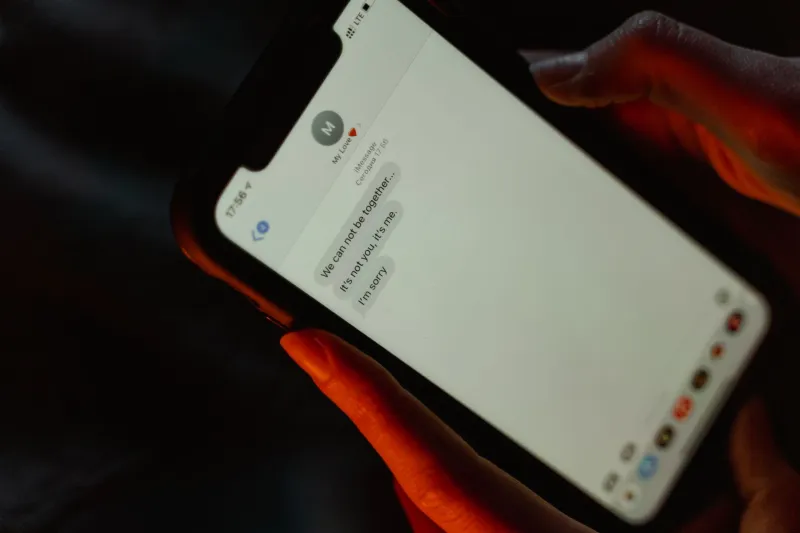
You Already Know It's a Bad Idea. So Why Can't You Stop?
Let's just say it out loud: you've done it. Most people have. You open Instagram — or TikTok, or Facebook, or LinkedIn if things are really desperate — and before you've fully registered what's happening, you're deep in the profile of someone your ex is now dating. You clock their follower count. You study their photos. You compare. You spiral.
And then you feel awful.
This isn't a character flaw. It isn't even particularly unusual. But it is worth understanding, because the cycle tends to feed on itself in ways that are genuinely hard to interrupt without knowing what's driving it in the first place.
So — why do we do this?
Your Brain Treats a Breakup Like a Withdrawal
Here's something that might reframe the whole thing: your brain doesn't really distinguish between romantic attachment and addiction in any meaningful neurological way. When you're in a relationship, your brain regularly gets doses of dopamine, oxytocin, and serotonin — the feel-good trifecta — tied directly to that person. Their texts, their presence, their attention. All of it becomes a source of chemical reward.
When the relationship ends, that supply cuts off. Cold turkey.
Researchers at Stony Brook University used fMRI scans to show that the brains of recently heartbroken people, when shown photos of their exes, lit up in the same regions activated by cocaine craving. That's not a metaphor. That's your actual neurons.
So when you find yourself reaching for their profile at midnight, you're not being dramatic or pathetic. You're experiencing something closer to a craving — and social media is the nearest available substitute for contact.
The Uncertainty Loop: Why Algorithms Make It Worse
Here's where it gets more complicated, and honestly a little darker.
Social media platforms are engineered around what behavioral scientists call variable reward — the same psychological mechanism that makes slot machines so hard to walk away from. You don't always find something upsetting when you check your ex's page. Sometimes it's nothing. Sometimes it's something small. Occasionally, it's something that sends your stomach into your throat.
That unpredictability is exactly what makes it compulsive. Your brain learns that checking might produce emotionally significant information, and that possibility keeps the loop running. The algorithm, meanwhile, is very good at surfacing content it knows will keep you engaged. If you've spent time on someone's profile, the platform notices. It'll find ways to keep them in your orbit — a suggested post here, a mutual friend interaction there.
You're not just fighting your own psychology. You're fighting a billion-dollar system designed to monetize your attention.
Jealousy, Curiosity, and the Stories We Tell Ourselves
People who study this behavior — and yes, researchers actually study this, it's called interpersonal electronic surveillance in academic circles, which sounds much more dignified than what it actually is — have identified a few distinct motivations that tend to overlap.
Closure-seeking. Breakups rarely come with clean endings. When the story feels unresolved, the brain keeps searching for a conclusion. Monitoring an ex's life becomes a strange substitute for the conversation that never happened.
Social comparison. Are they happier now? Do they seem fine? Are you doing better or worse than their new person? This kind of comparison feels like gathering information, but it almost never leads anywhere useful. The data is always incomplete, always filtered, and almost always interpreted through the lens of whatever you're already feeling.
Residual attachment. Sometimes you're not over it. That's just honest. And in the absence of actual contact, surveillance becomes a way of maintaining a connection — even a one-sided, painful one — rather than letting go entirely.
What's interesting is that the behavior rarely makes any of these underlying needs better. Closure doesn't come from a grid of curated photos. Comparison doesn't produce peace. And a parasocial relationship with someone's highlight reel isn't the same as actual connection.
The Specific Cruelty of Watching Someone Move On
There's a particular kind of pain that comes from watching an ex in a new relationship, and it's worth naming directly rather than dancing around it.
It's not always about wanting them back. Sometimes it's something more complicated — a sense that their moving on is a verdict on the relationship, or on you. A new partner becomes evidence of something, even if you're not entirely sure what. That they're fine. That they weren't as devastated as you. That you were replaceable.
None of that is necessarily true, but the brain in a vulnerable state isn't great at nuance. It's looking for meaning, and it will find it whether or not it's actually there.
This is part of why the checking tends to escalate rather than satisfy. Each session ends with more questions than it started with, and the only solution the brain can generate is: check again tomorrow.
So How Do You Actually Break the Cycle?
The honest answer is that it takes more than willpower, because willpower is a finite resource and algorithms are not.
A few things that actually tend to help:
Make it harder to access, not just easier to resist. Mute, restrict, or unfollow. Block if you need to — not as a dramatic gesture, but as a practical friction point. If checking requires extra steps, you're more likely to catch yourself before you're already three posts deep.
Name what you're actually looking for. Before you open the app, ask yourself honestly: what am I hoping to find? If the answer is something that would genuinely make you feel better, consider whether this is actually the way to get it. Usually it isn't.
Replace the loop, don't just break it. Telling yourself to simply stop doesn't work well with craving-based behavior. It's more effective to have something else to do in that moment — something that provides a different kind of stimulation or comfort. Sounds basic, but it works.
Talk to someone who isn't your phone. This is where the AnyQuestion community can genuinely help. Sometimes the thing you need isn't more information about your ex — it's a place to process what you're actually feeling. Ask the questions you're really asking. You might be surprised how many people have been exactly where you are.
Give it time and be honest about your timeline. The neurological withdrawal from a significant relationship can take months. That's not weakness. That's biology. Being realistic about the timeline makes it easier to be patient with yourself without using that patience as an excuse to keep the habit going.
The Question Underneath the Question
At its core, post-breakup digital surveillance is usually less about the ex and more about an unanswered question you're carrying — about your worth, your future, whether you made the right call, whether you'll be okay.
Social media can't answer any of that. But it's very good at making you feel like it might, just one more scroll away.
The better questions — the ones actually worth asking — tend to live somewhere else entirely.