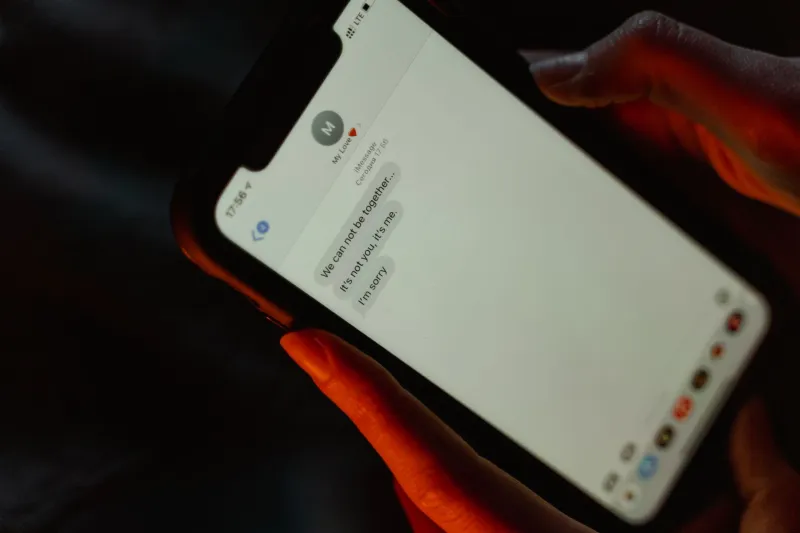
Your Brain Is Being Hacked Every Time You Open That App — Here's the Proof
You've done it. We've all done it. You pick up your phone to check one thing — a weather update, a text from your mom — and forty-five minutes later you're watching a video of someone making pasta in rural Italy and you genuinely cannot explain how you got there.
This isn't a willpower problem. It's not laziness, and it's not some character flaw you need to journal your way through. What's happening to you is the result of billions of dollars in engineering, decades of behavioral psychology research, and a feedback loop that your brain was never designed to resist. The question isn't why are you so weak? The real question — the one worth asking — is why was this built to be so hard to escape?
The Slot Machine in Your Pocket
Here's something a former Google design ethicist named Tristan Harris said that stuck with a lot of people: your phone is a slot machine. Every time you pull down to refresh your feed, you're doing exactly what a gambler does when they yank that lever. Sometimes you get something great — a hilarious meme, news you actually care about, a photo that genuinely moves you. Sometimes you get nothing. And that unpredictability? That's the whole point.
Neuroscientists call this variable reward reinforcement, and it's one of the most powerful behavioral conditioning mechanisms ever identified. When rewards are unpredictable, the brain releases more dopamine in anticipation of the reward than it does when the reward is guaranteed. You're not chasing the good post. You're chasing the possibility of the good post. That's a completely different — and much harder to quit — kind of chase.
Dopamine, by the way, isn't really the "pleasure chemical" it's often called. It's more accurately a seeking chemical. It drives you toward things, not through them. So the scroll never actually satisfies. It just keeps you hunting.
Algorithms Are Watching You More Carefully Than Any Human Ever Has
Let's be honest about what these platforms are. TikTok, Instagram, YouTube — they are not social networks in any traditional sense. They are attention-harvesting machines, and they are extraordinarily good at their jobs.
Every pause, every replay, every time you slow your scroll on a certain type of content — that data gets fed back into an algorithm that is constantly recalibrating what to show you next. These systems are optimizing for one thing: keeping you on the app as long as possible. Not keeping you happy. Not keeping you informed. Just keeping you there.
Research published in the journal Nature Human Behaviour found that social media platforms systematically amplify content that triggers emotional arousal — particularly outrage and anxiety — because high-emotion content keeps people engaged longer. In plain terms: the algorithm has figured out that making you angry or scared is better for business than making you feel good.
So when you find yourself stuck in a spiral of upsetting news clips or infuriating comment sections, that's not an accident. That's the product working exactly as designed.
Why "Just Put the Phone Down" Is Genuinely Terrible Advice
We've all heard it. From parents, from wellness influencers, from that one coworker who does a monthly digital detox and will not stop telling you about it. "Just be more disciplined. Set limits. Use willpower."
Here's the problem: willpower is a finite resource. Psychologists call this ego depletion — the idea that self-control draws on a limited mental reserve that gets drained throughout the day. By the time you're sitting on the couch at 9 PM after a full day of decisions, stress, and mental effort, your capacity for self-regulation is at its lowest. And that's precisely when most Americans do their heaviest scrolling.
You're not failing at discipline. You're running on empty, and these apps are designed to catch you at your most vulnerable.
On top of that, the habit loop itself becomes deeply embedded over time. Behavioral scientists describe it as a cue-routine-reward cycle: you feel bored or anxious (cue), you open the app (routine), you get a brief hit of stimulation (reward). Do that enough times and the behavior becomes nearly automatic. Your thumb opens Instagram before your conscious brain has even registered the impulse.
What Actually Works (According to People Who Study This for a Living)
The good news is that behavioral science doesn't just explain the problem — it also points toward real solutions. And none of them require you to become a monk.
Change the environment, not just the intention. Research consistently shows that altering your physical environment is more effective than relying on motivation. Move apps off your home screen. Charge your phone in another room at night. Put your phone in a drawer during meals. These aren't dramatic gestures — they're friction. And friction works because it interrupts the automatic behavior before it starts.
Replace, don't just remove. Trying to eliminate scrolling cold turkey usually backfires. Your brain still needs stimulation and connection — those are legitimate needs. The trick is giving it an alternative that meets the same need. Keep a book on your nightstand. Text a friend instead of passively consuming their stories. The substitution has to feel like a real trade, not a punishment.
Use the apps' own tools against them. Both iOS and Android have built-in screen time dashboards that most people set up once and then ignore. But the research on implementation intentions — basically, making a specific plan rather than a vague goal — suggests that setting a concrete limit ("I'll stop at 30 minutes of TikTok per day") is significantly more effective than a fuzzy intention to "use my phone less."
Audit your feeds deliberately. Unfollow accounts that consistently make you feel worse. Mute keywords that send you down rabbit holes. This sounds obvious, but most people never do it because the scroll feels passive — like something happening to them rather than something they can actively shape. You have more control over your feed than the algorithm wants you to believe.
The Bigger Question Worth Sitting With
Maybe the most useful thing you can do is ask yourself what you're actually looking for when you reach for your phone. Distraction from stress? Connection? Stimulation because you're bored? Validation through likes and comments?
None of those are shameful answers. They're human answers. But a feed full of algorithmically optimized content is a pretty terrible solution to any of them. And once you can name what you're actually hungry for, you're in a much better position to find something that genuinely feeds it.
Your attention is, without exaggeration, one of the most valuable things you own. A lot of very smart, very well-funded people are working around the clock to take it from you. Knowing that doesn't make you immune — but it does make you a harder target.
Got questions about digital habits, screen time, or the psychology of technology? Drop them in the AnyQuestion community — our experts are here for exactly this kind of thing.