The News Is Terrible and You Can't Stop Reading It — What's Actually Going On
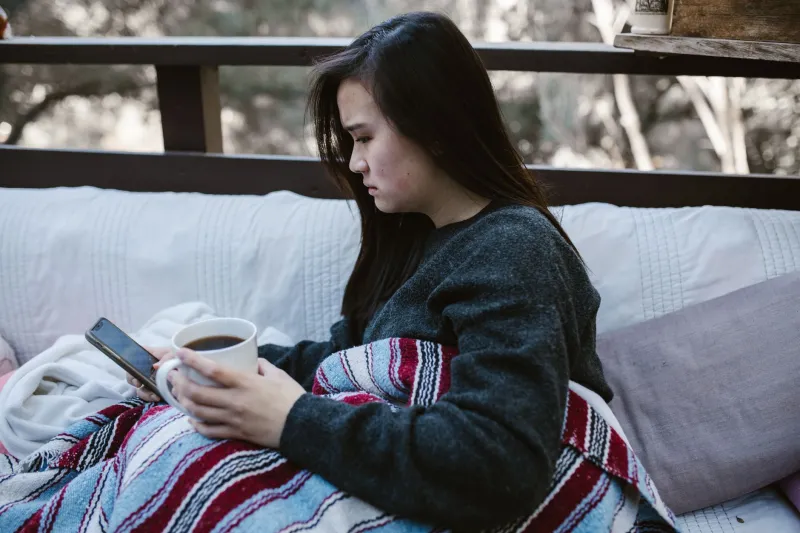
Somebody on your feed posts a breaking news alert. You tell yourself you'll just check the headline. Twenty-five minutes later, you've read six articles, three opinion pieces, and a comment thread that made your blood pressure spike — and you feel genuinely worse than you did before you started.
So why did you do it? And more importantly, why will you probably do it again tonight?
This is one of those questions that sounds simple until you actually try to answer it. Turns out, the pull toward bad news isn't a personal flaw or a sign that something's wrong with you. It's a deeply wired human behavior that modern media — and the algorithms running it — has learned to exploit with alarming precision.
Your Brain Was Built for Worst-Case Scenarios
Here's the foundational thing to understand: your brain didn't evolve for a world of infinite information. It evolved for survival. And in a survival context, negative information is almost always more valuable than positive information.
If you're living in a small community thousands of years ago, knowing that there's a predator nearby is urgent. Knowing that the berries on the east hill are particularly sweet this season is nice, but it can wait. Your brain developed what psychologists call a negativity bias — a tendency to prioritize, remember, and seek out threatening or negative stimuli more than neutral or positive ones.
Fast forward to 2024, and that same bias is still running in the background of your mind. Except now instead of scanning for predators, you're scanning headlines about economic collapse, political chaos, natural disasters, and international conflict. Your brain registers all of it as potential threats. And threats, by evolutionary design, demand your attention.
The result? You can't look away. Not because you're a pessimist. Because you're human.
The Algorithm Isn't Neutral — It's Hungry
If your brain's negativity bias is the kindling, social media and news algorithms are the accelerant.
Every major platform — whether it's X (formerly Twitter), Facebook, YouTube, or any of the big news aggregators — runs on engagement metrics. The longer you stay on the platform, the more ads you see, the more money they make. It's a straightforward business model with a deeply uncomfortable consequence: content that provokes strong emotional reactions keeps people on-platform longer than content that doesn't.
And what provokes the strongest emotional reactions? Fear. Outrage. Anxiety. Disbelief.
This is why your feed isn't a neutral reflection of what's happening in the world. It's a curated stream of whatever made the most people react the most intensely. Algorithms have essentially learned to reverse-engineer your negativity bias and feed it on a loop. Every scroll is a little hit of cortisol. Every alarming headline is the algorithm doing exactly what it was optimized to do.
You're not weak for getting caught in it. You're responding exactly the way the system was designed to make you respond.
When "Staying Informed" Becomes a Coping Mechanism
There's another layer here that doesn't get talked about enough. For a lot of people, compulsive news consumption isn't just passive. It's an active (if misguided) attempt to manage anxiety.
The logic goes something like this: If something bad is coming, I want to know about it first. If I stay informed, I'll be prepared. If I'm prepared, I'll be safe.
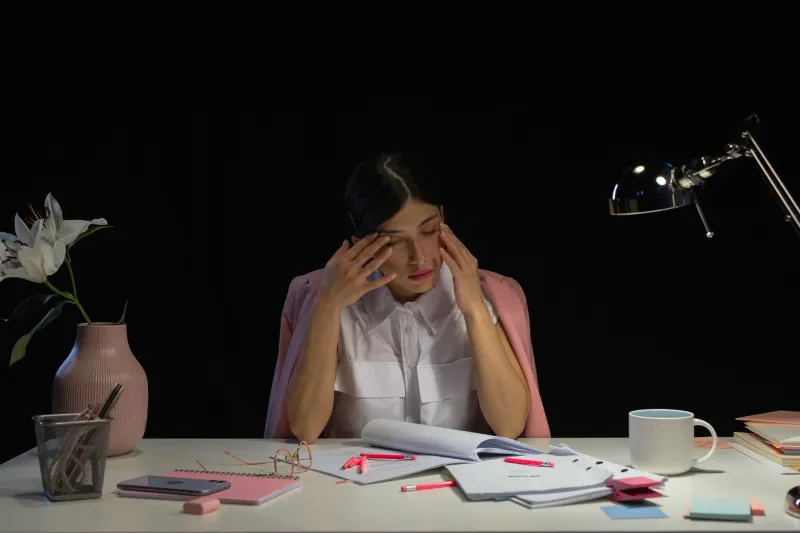
The problem is that this logic falls apart almost immediately in practice. Reading your fourteenth article about a geopolitical crisis doesn't give you more control over the outcome. It doesn't make you safer. What it does do is keep your nervous system in a state of low-grade alarm — which, over time, starts to feel normal.
Psychologists sometimes call this hypervigilance — a state where your threat-detection system gets stuck in the "on" position. You're not actually processing information anymore. You're just scanning for danger, over and over, without resolution.
The irony is painful: you're consuming news to feel less anxious, and it's making you more anxious.
The Specific Toll on American News Consumers
In the US context, this problem has a particular intensity. American news media — across the political spectrum — has historically leaned hard into conflict framing. Stories aren't just reported; they're positioned as battles, crises, emergencies. The 24-hour news cycle, which exploded in the cable era and went hyperdrive with smartphones, created an environment where there's always something urgent happening, always a reason to keep watching.
Studies from the American Psychological Association have repeatedly found that a significant portion of Americans report the news as a major source of stress in their lives — and yet the same people report checking the news constantly. That's not a contradiction. That's a compulsion loop.
And it's gotten harder to escape because the news is no longer something you have to actively seek out. It finds you. In your texts, your social feeds, your podcasts, your email newsletters. Opting out takes deliberate effort in a way it simply didn't twenty years ago.
So What Can You Actually Do About It?
Let's be clear: the goal here isn't to suggest you go fully off-grid or stop caring about what's happening in the world. Being an informed citizen matters. But there's a real difference between informed and overwhelmed, and finding that line is worth the effort.
Set time limits with actual structure. Vague intentions to "check the news less" rarely work. Specific rules do. Try designating two windows per day — say, 15 minutes in the morning and 15 minutes in the evening — for news consumption. Outside of those windows, the apps stay closed.
Audit your sources deliberately. Not all news consumption is equal. Reading a long-form reported piece from a publication you trust is genuinely different from doomscrolling through a breaking news Twitter thread at midnight. One gives you context. The other gives you anxiety.
Notice what you're actually feeling before you open the app. Are you bored? Stressed? Anxious about something unrelated? A lot of news-checking is displacement behavior — reaching for something external when something internal feels uncomfortable. Getting honest about that pattern is the first step to changing it.
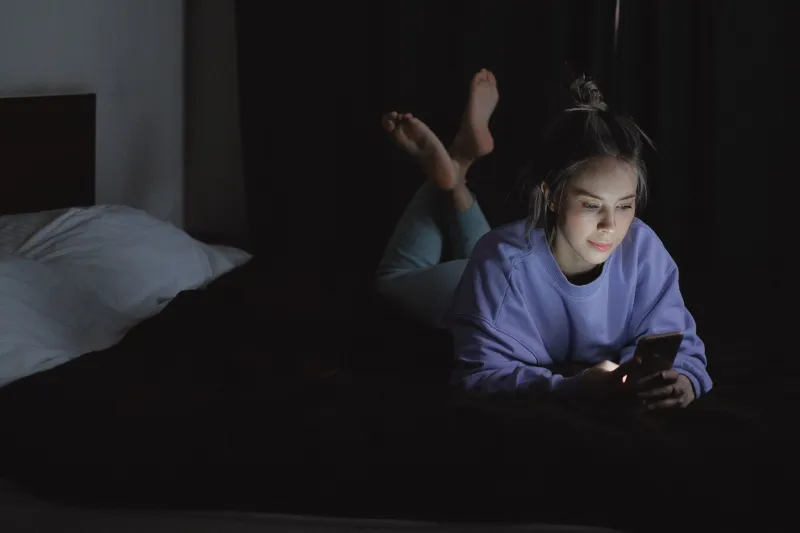
Build in a buffer before bed. Late-night news consumption is particularly rough because your brain doesn't have time to wind down before sleep. A simple rule — no news in the hour before bed — can make a measurable difference in sleep quality and morning anxiety levels.
Give yourself permission to not know everything. This one's hard, especially if you've internalized the idea that staying constantly informed is a civic duty. It isn't. The world will not fall apart because you didn't read the eleventh take on today's top story. The most important things have a way of reaching you regardless.
The Bottom Line
You're not broken for getting sucked into bad news. Your brain is doing exactly what it was built to do, in an environment specifically engineered to exploit that tendency. Understanding that dynamic doesn't make it disappear — but it does give you a little more room to make a different choice.
And sometimes, that's enough to close the tab.